Table of Contents
Toggle🏔️ Covadonga Sanctuary
Imagine standing before a ethereal cave carved into a limestone cliff, where a waterfall thunders below your feet. This isn’t just a religious site; it is the rocky cradle where the Kingdom of Spain was born.
Whether you seek the spiritual silence of the Holy Cave or the architectural grandeur of the pink Basilica, this guide ensures you navigate the storied sanctuary like an expert.
⚔️ Historic Roots: Walk the ground where King Pelayo won the first battle of the Reconquista.
⛪ Architectural Marvels: Explore the Neo-Romanesque Basilica built entirely from unique pink mountain stone.
⛰️ Gateway to Peaks: Prepare your ascent from the sanctuary to the fabled Lakes of Covadonga nearby.
🚀 Organize Your Journey To coordinate your visit with the rest of your trip through Green Spain, consult our Ultimate Northern Spain Travel Guide for professional regional planning.
📍 Covadonga Snapshot: Quick Essential Guide
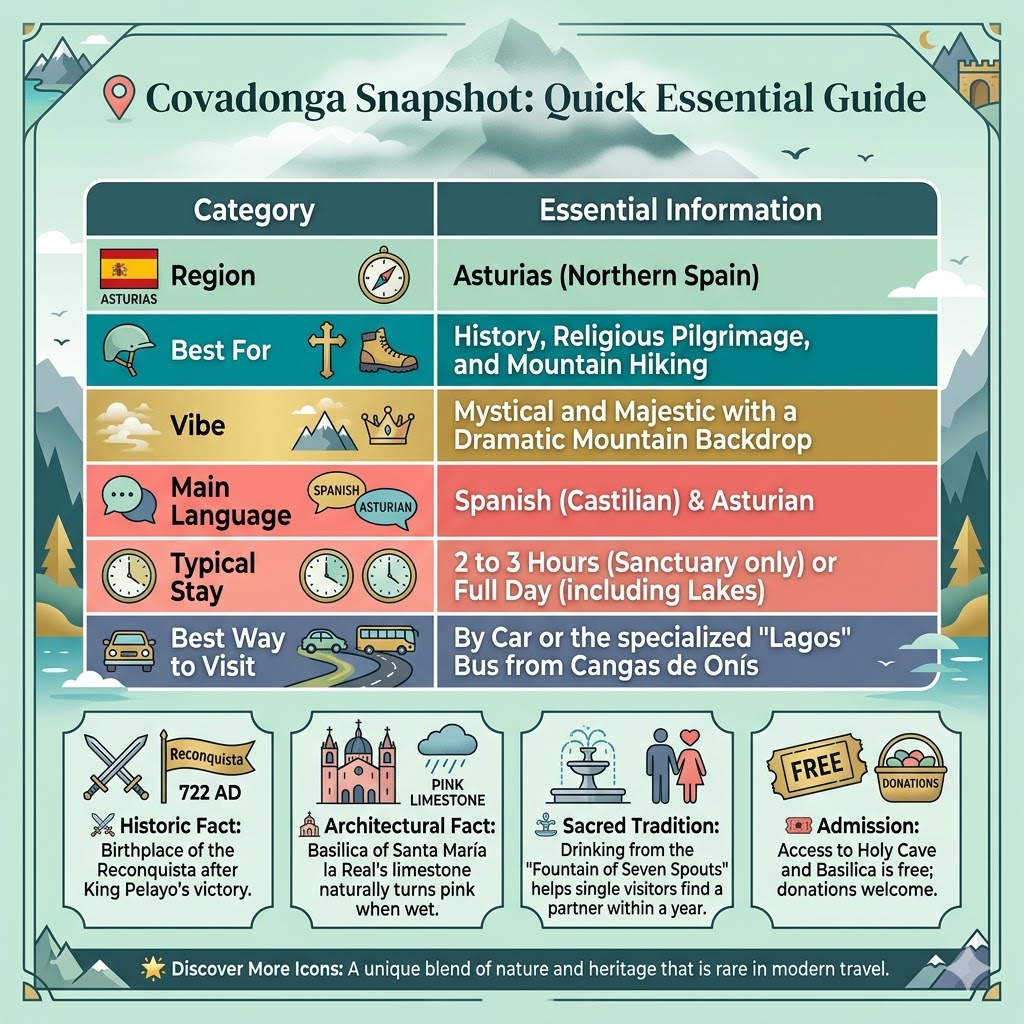
Before exploring the mist-covered peaks and the sacred silence of the cave, here is a high-level overview of what you need to know to plan your visit to this Asturian jewel.
| Category | Essential Information |
| Region | Asturias (Northern Spain) |
| Best For | History, Religious Pilgrimage, and Mountain Hiking |
| Vibe | Mystical and Majestic with a Mountain Backdrop |
| Main Language | Spanish (Castilian) & Asturian |
| Typical Stay | 2 to 3 Hours (Sanctuary only) or Full Day (including Lakes) |
| Best Way to Visit | By Car or the specialized “Lagos” Bus from Cangas de Onís |
⚔️ Historic Fact: Covadonga is widely celebrated as the birthplace of the Reconquista after King Pelayo’s victory in 722 AD.
⛪ Architectural Fact: The Basilica of Santa María la Real is built with limestone that naturally turns pink when wet.
⛲ Sacred Tradition: Locals believe that drinking from the “Fountain of Seven Spouts” under the Cave helps single visitors find a partner within a year.
🎟️ Admission: Access to the Holy Cave and the Basilica is free, though donations are welcome for maintenance.
🌟 Discover More Icons
Covadonga is undoubtedly one of the most spiritual Spanish Attractions you can visit, offering a unique blend of nature and heritage that is rare in modern travel.
🏛️ Covadonga vs. Potes: Which Mountain Gem Should You Visit?
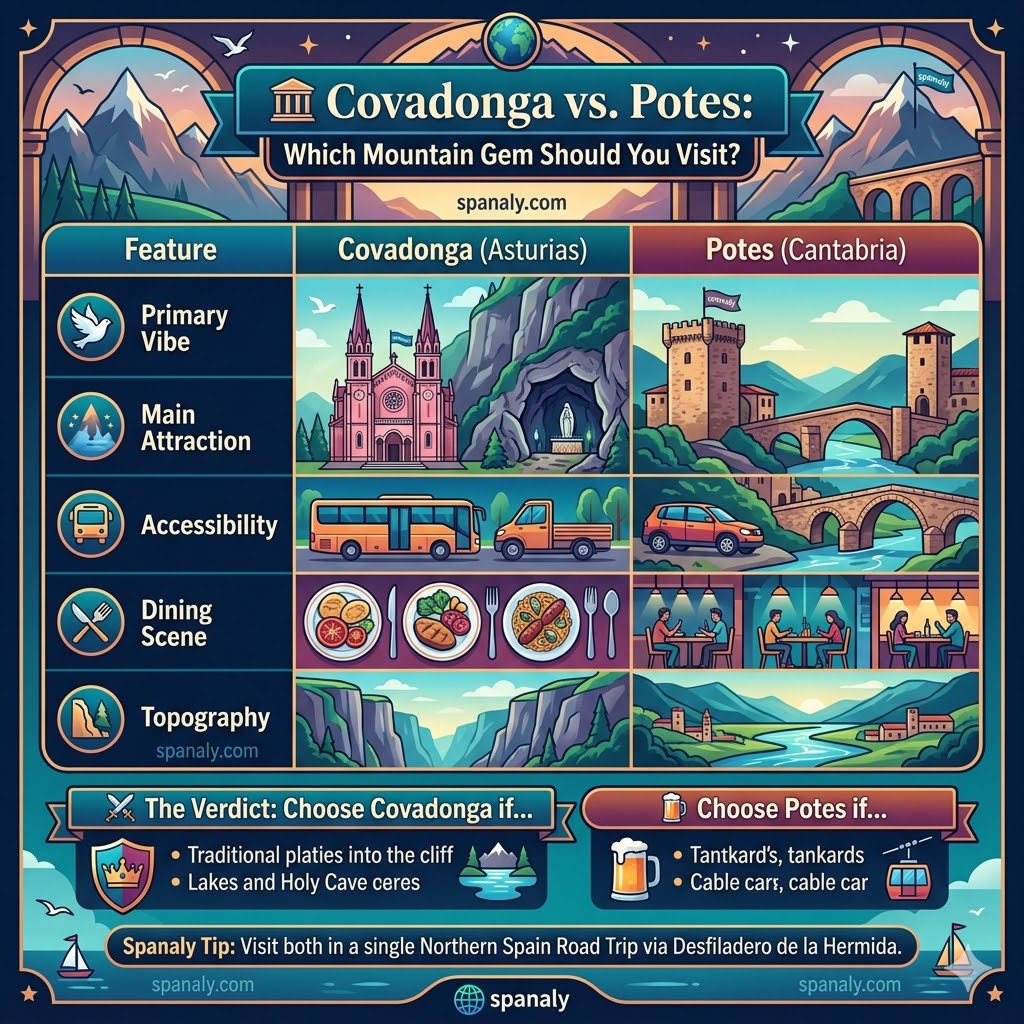
While both destinations serve as gateways to the Picos de Europa, they offer vastly different experiences for travelers exploring Asturias and Cantabria.
| Feature | Covadonga (Asturias) | Potes (Cantabria) |
| Primary Vibe | Spiritual, historic, and mystical. | Medieval, bustling, and mountainous. |
| Main Attraction | The Holy Cave and pink Basilica. | The Torre del Infantado and stone bridges. |
| Accessibility | Strict traffic controls (shuttle buses only). | Easy access by car with central parking. |
| Dining Scene | Limited options; mostly traditional cider houses. | Vibrant food scene; famous for Cocido Lebaniego. |
| Topography | Built into a vertical mountain cliff. | Set in a lush valley where four rivers meet. |
⚔️ The Verdict: Choose Covadonga if…
You want to stand at the spiritual heart of Spain. It is the best choice for those seeking silence, religious architecture, and a direct link to the legendary Lakes of Covadonga.
🍺 Choose Potes if…
You prefer a lively medieval atmosphere with more dining and shopping variety. It serves as a perfect base for hikers and those wanting to ride the nearby Fuente Dé Cable Car for high-altitude views.
Spanaly Tip: If your itinerary allows, you can visit both in a single Northern Spain Road Trip as they are separated by the stunning Desfiladero de la Hermida.
⚔️ History of Covadonga: The Cradle of Spain and Pelayo’s Victory
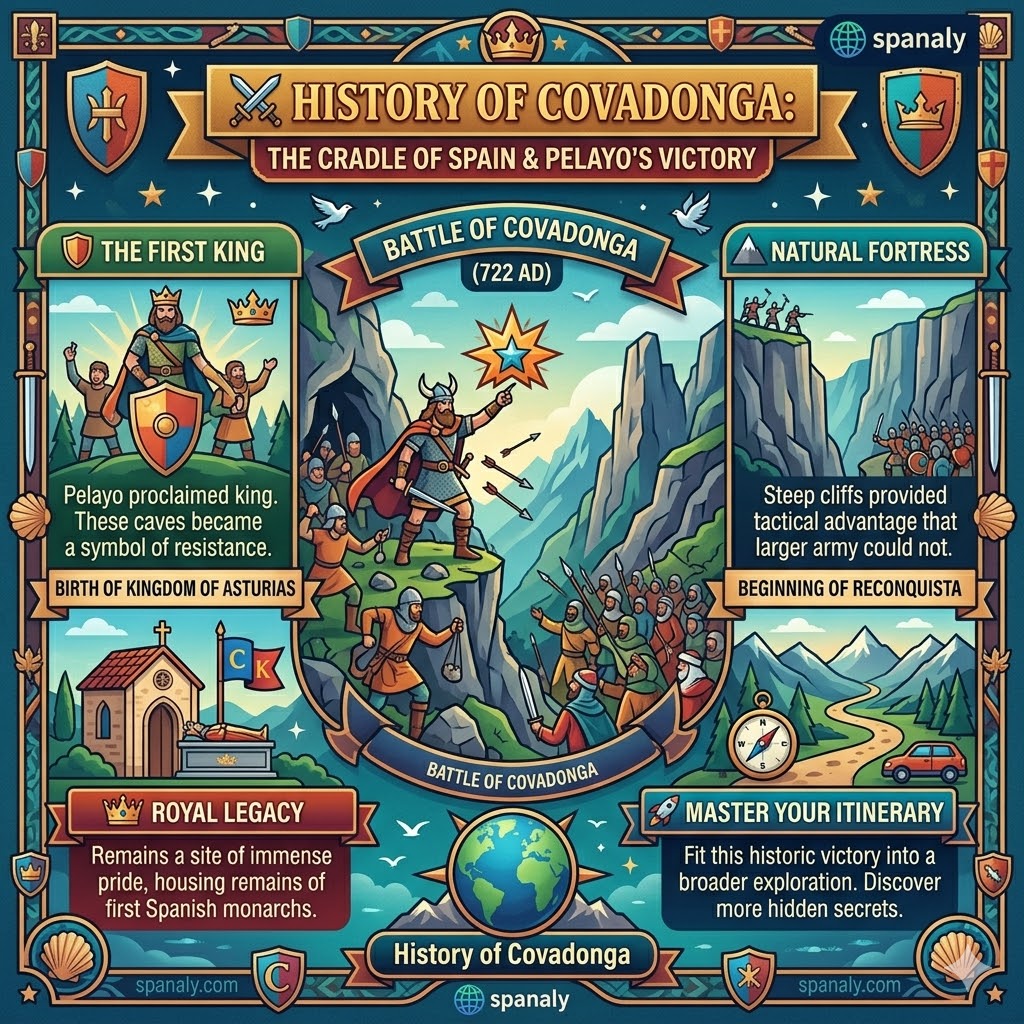
The year was 722 AD. A small group of Christian rebels, led by a nobleman named Pelayo, took a final stand against the Moorish forces in these formidable mountains.
Against all odds, Pelayo’s warriors used the vertical terrain of Picos de Europa to secure a decisive victory. This clash, known as the Battle of Covadonga, effectively marked the birth of the Kingdom of Asturias and the beginning of the Reconquista.
🛡️ The First King: Pelayo was proclaimed king right here, turning these caves into a symbol of resistance.
🏔️ Natural Fortress: The steep cliffs provided a tactical advantage that the larger invading army could not overcome.
👑 Royal Legacy: Today, the site remains a site of immense pride, housing the remains of the first Spanish monarchs.
🚀 Master Your Itinerary To see how this historic victory fits into a broader exploration of the region, follow our Santander and Picos de Europa Itinerary to discover more hidden mountain secrets.
🙏 The Holy Cave (Santa Cueva): Virgin of Covadonga and the Sacred Tomb
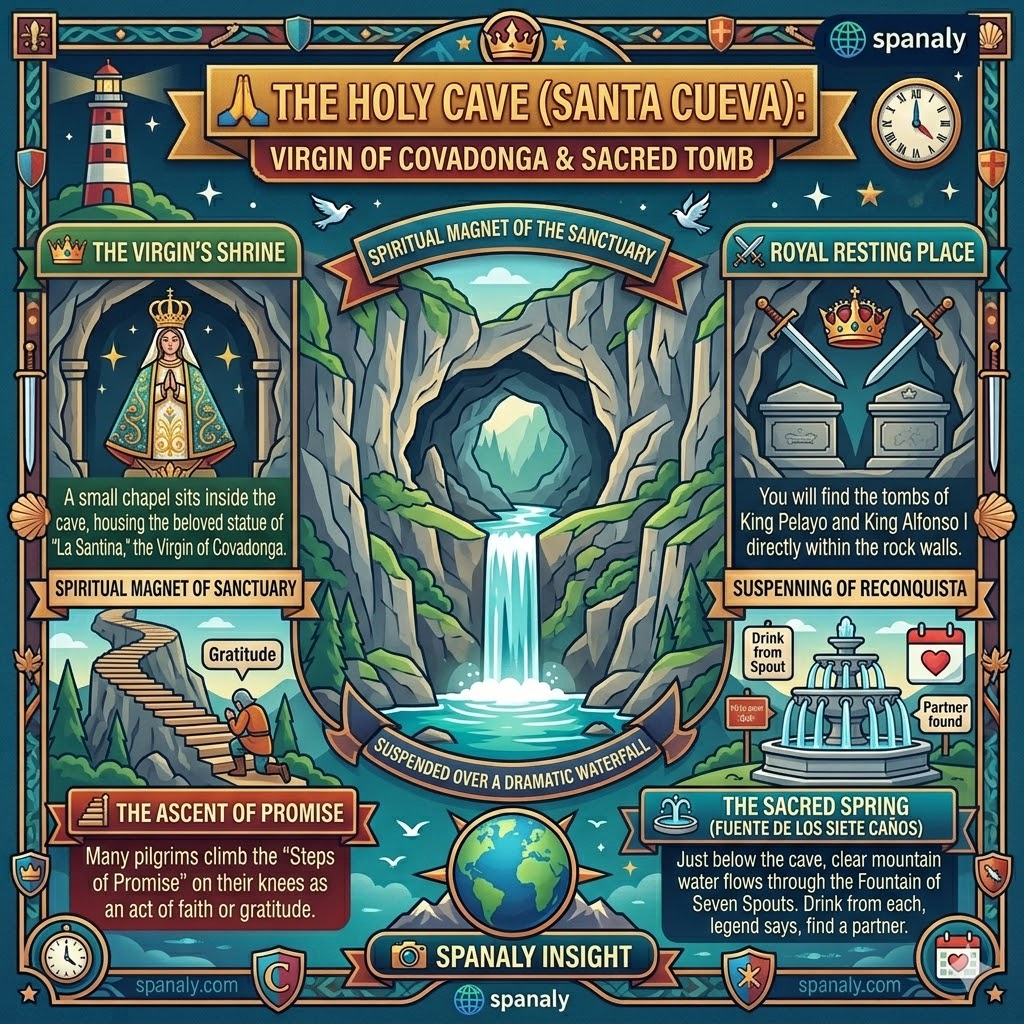
The Holy Cave is the spiritual magnet of the sanctuary, a natural hollow carved into the limestone cliff. It serves as both a shrine and a historic tomb, suspended over a waterfall.
👑 The Virgin’s Shrine: A small chapel sits inside the cave, housing the beloved statue of “La Santina,” the Virgin of Covadonga.
⚔️ Royal Resting Place: You will find the tombs of King Pelayo and King Alfonso I directly within the rock walls.
🪜 The Ascent of Promise: Many pilgrims climb the “Steps of Promise” on their knees as an act of faith or gratitude.
⛲ The Sacred Spring (Fuente de los Siete Caños)
Just below the cave, crystal-clear mountain water flows through the Fountain of Seven Spouts. Local legend claims that single visitors who drink from each spout will find a partner within the year.
Spanaly Insight: If you want to photograph the cave without crowds, visit during the 15-minute window between official masses. The silence at this moment makes the spiritual energy of the site feel far more authentic.
⛪ Basilica of Santa María la Real: Architectural Masterpiece
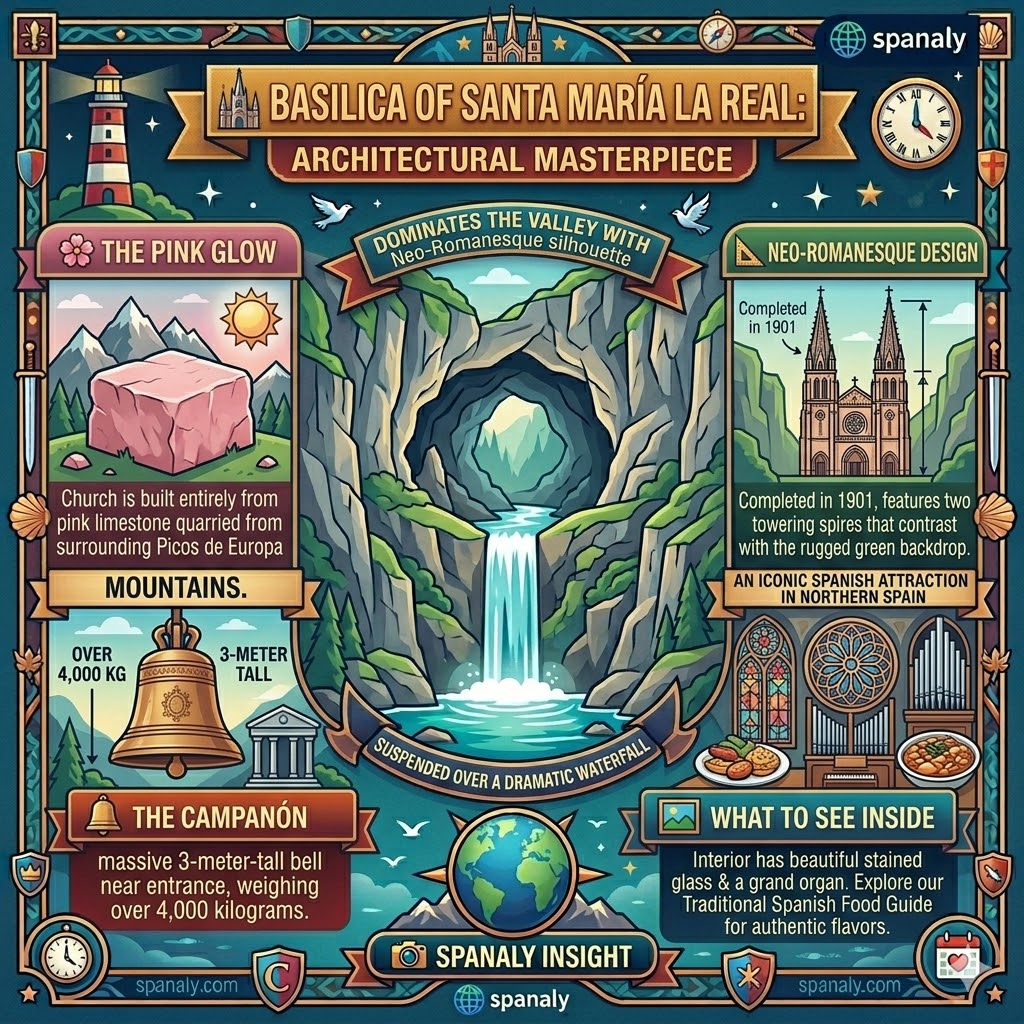
Perched on a grassy outcrop, the Basilica doesn’t just sit in the valley it commands it. The building feels alive as the light changes, shifting from a pale rose to a deep, earthy pink when the Asturian mist clings to its walls.
🌸 The Living Stone: The entire structure is carved from local limestone that feels surprisingly rough and cold to the touch, hauled directly from the surrounding Picos de Europa peaks.
📐 Sharp Spires: Finished in 1901, the twin towers slice through the fog, their Neo-Romanesque lines standing out against the wild, craggy green mountainside.
🔔 The Campanón: You’ll hear it before you see it; this 4,000-kilogram giant sits near the entrance, standing 3 meters tall and weathered by decades of mountain air.
🖼️ What to See Inside
The air inside is thick with the scent of old incense and wax, offering an intimate escape from the mountain wind. Beneath the grand organ and stained glass, you’ll find a quiet that feels centuries old. To truly understand the culture that built this, explore our Traditional Spanish Food Guide to see how the rugged landscape shapes both the architecture and the plate.
Spanaly Insight: Don’t just stand in the plaza. Walk toward the museum entrance where the ground slopes away; from here, the pink stone catches the morning sun perfectly, creating a sharp contrast against the dark, jagged cliffs behind it.
⛲ Los Leones Fountain & The Sacred Spring: Legends
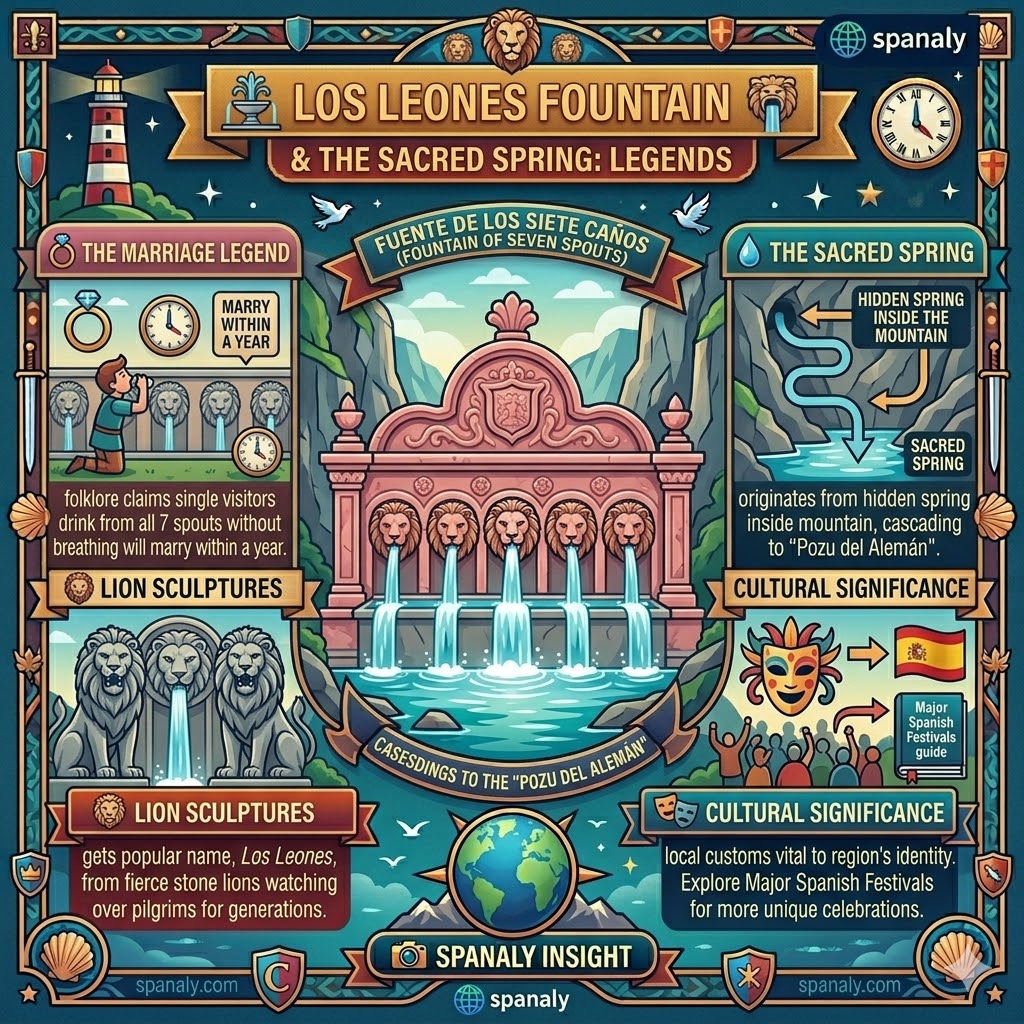
Tucked just beneath the Holy Cave, the Fuente de los Siete Caños isn’t just a tap for hikers; it’s a stone monument where the icy breath of the mountain meets local superstition. The water here is so bone-chillingly cold that your skin will prickle the second it touches the flow.
💍 The Marriage Dare: Local lore whispers that if you drink from all seven spouts in one single breath, you’ll find a partner within the year. It’s a common sight to see red-faced tourists gasping for air while trying to complete the ritual.
💧 The Mountain’s Pulse: This crystal-clear flow spills from a hidden crack in the limestone, crashing down into a mossy pool known as the “Pozu del Alemán”.
🦁 Stone Guardians: The fountain takes its nickname, Los Leones, from the moss-covered stone lions that have watched millions of pilgrims pass by with their fierce, frozen stares.
🎭 Cultural Significance
These quirky rituals are the heartbeat of Asturian identity. To see how these mountain myths connect to the larger tapestry of the country’s traditions, dive into our guide to Spanish Festivals to discover more vibrant celebrations that define Spain.
🖼️ Museum of Covadonga: Royal Treasures & Offerings
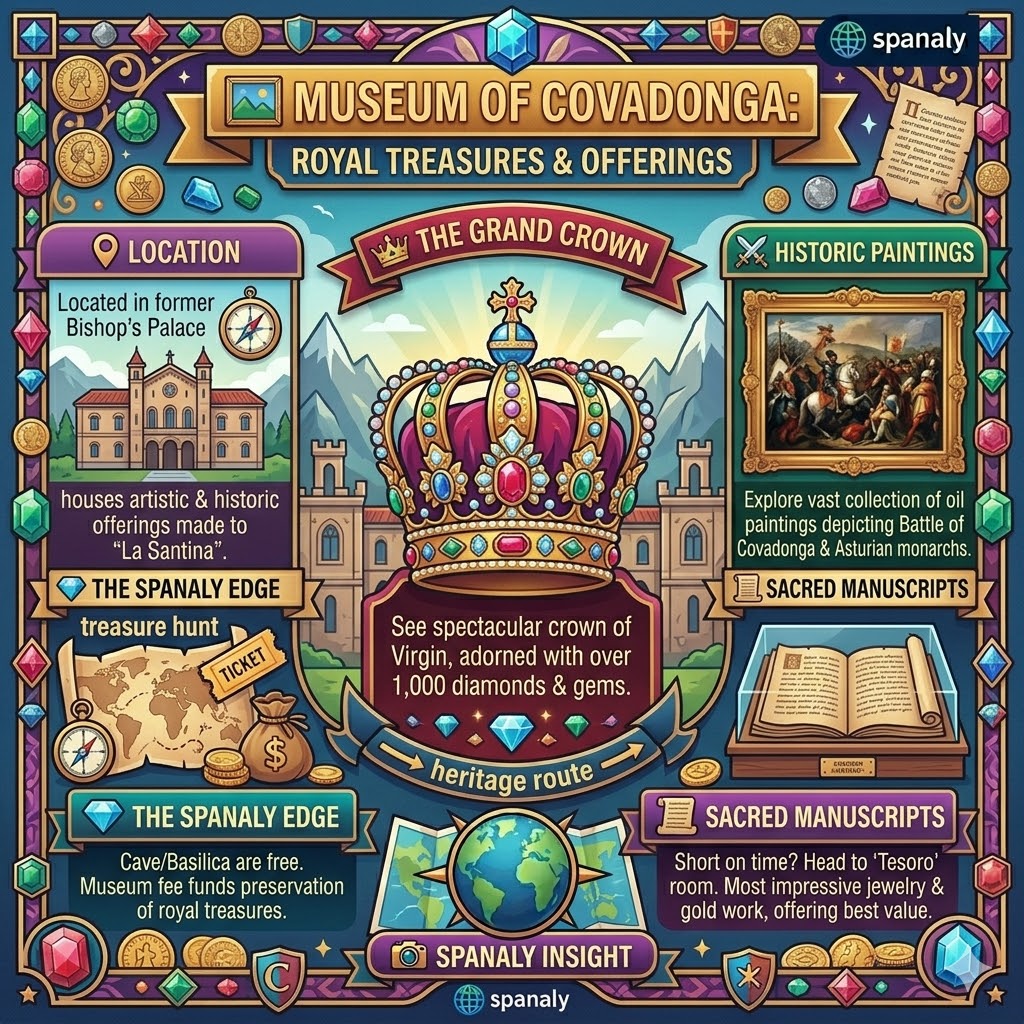
Housed in the former Bishop’s Palace, this museum offers a quiet escape into Asturias’ royal past. The thick stone walls keep the galleries cool, creating a peaceful atmosphere to view the gifts left by the Spanish Crown to honor “La Santina”.
👑 The Virgin’s Crown: This spectacular piece is encrusted with over 1,000 diamonds that glitter even in the dim gallery light.
⚔️ Historic Canvas: Large oil paintings depict the famous Battle of Covadonga, showing the dramatic first steps of the Asturian monarchs.
📜 Ancient Records: Look for the medieval manuscripts with yellowed vellum that document how this sanctuary became a national symbol.
💎 The Spanaly Edge
While the cave and Basilica are free, the museum requires a small fee to help preserve these royal artifacts. To see how these treasures fit into a broader trip, check our guide on the Best Places To Visit in Northern Spain to plan your heritage route.
Spanaly Insight: If you are short on time, head straight to the “Tesoro” (Treasure) room. The gold work there is incredibly detailed and represents the true heart of the collection—it’s the best value for your museum ticket.
⛰️ Beyond the Sanctuary: Lakes of Covadonga Guide
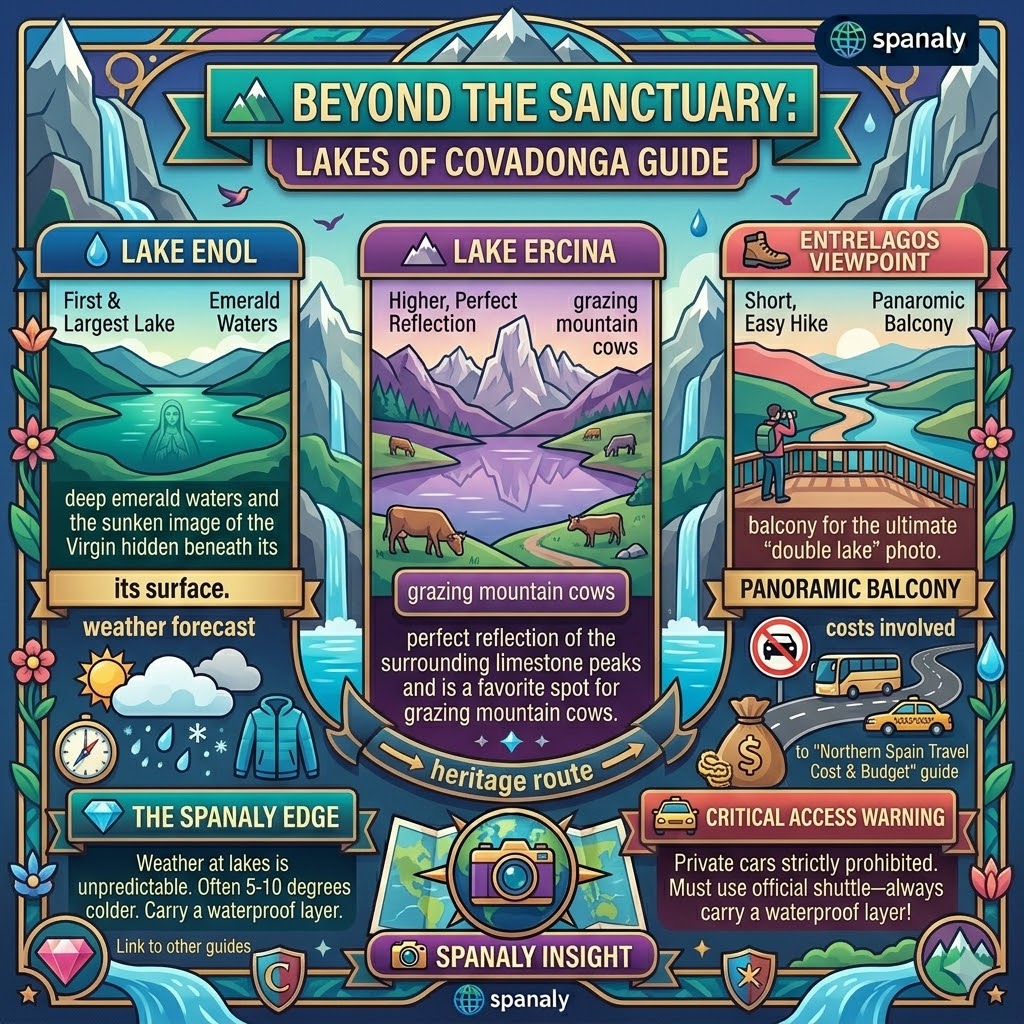
Just 12 kilometers uphill from the sanctuary lie the legendary Lakes of Covadonga (Enol and Ercina). These glacial lakes are the crown jewel of the Picos de Europa National Park, offering some of the most dramatic landscapes in Northern Spain.
💧 Lake Enol: The first and largest lake you will encounter, famous for its deep emerald waters and the sunken image of the Virgin hidden beneath its surface.
🏔️ Lake Ercina: Located slightly higher, this lake offers a perfect reflection of the surrounding limestone peaks and is a favorite spot for grazing mountain cows.
🥾 Entrelagos Viewpoint: A short, easy hike between the two lakes leads you to this panoramic balcony for the ultimate “double lake” photo.
🚗 Critical Access Warning
During peak seasons, private cars are strictly prohibited on the road to the lakes. You must use the official shuttle buses or taxis from the sanctuary. To better understand the costs involved in these mountain logistics, check our guide on Spain Travel Budget to plan your finances.
Spanaly Insight: Weather at the lakes is unpredictable and often 5-10 degrees colder than at the sanctuary. Even on a sunny day, the “Atlantic Mist” can roll in within minutes always carry a waterproof layer!
🚗 How to Get to Covadonga: Transport and Parking Tips
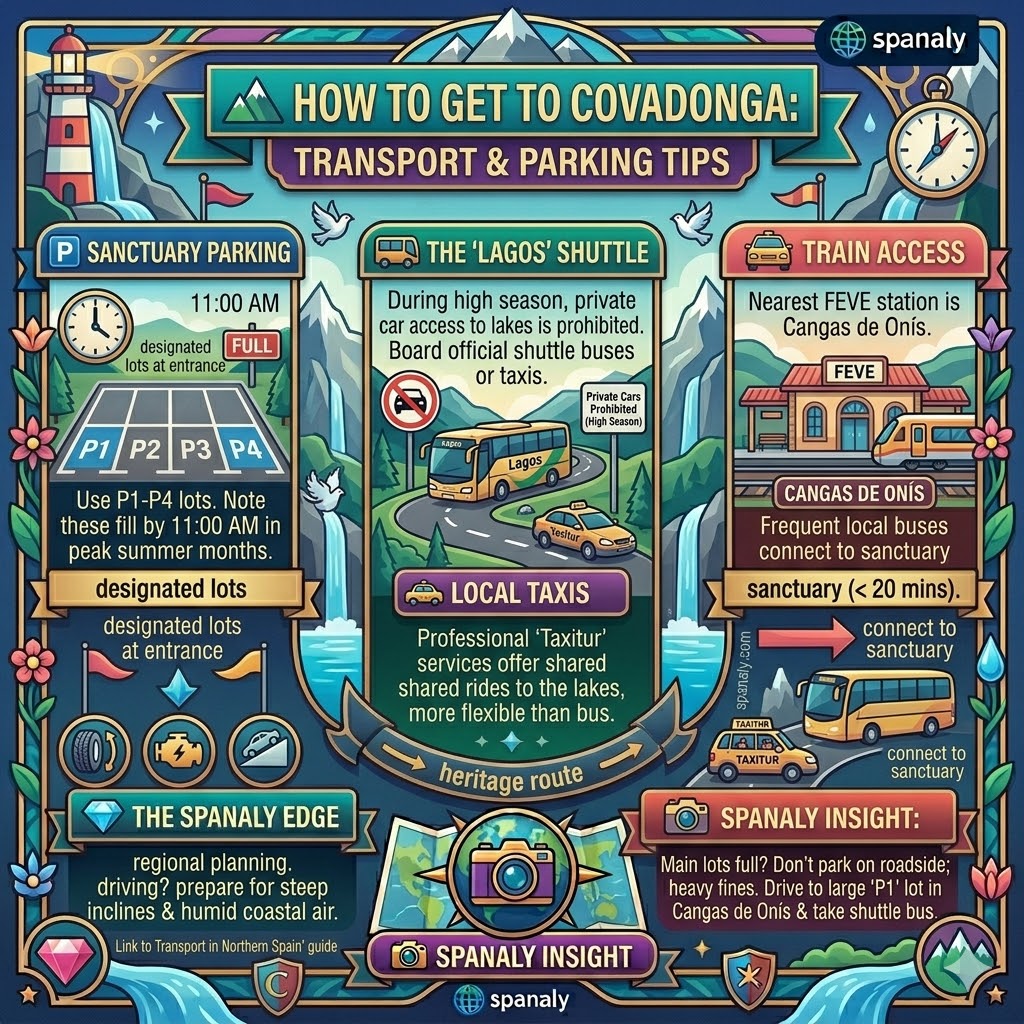
Reaching Covadonga is straightforward, but the final ascent requires careful planning due to strict environmental protections. Navigating the narrow mountain roads is easiest when you understand the local transit hierarchy.
🅿️ Sanctuary Parking: Use the designated parking lots (P1, P2, P3, or P4) located at the entrance. Note that these fill up by 11:00 AM during peak summer months.
🚌 The “Lagos” Shuttle: During high season, access to the lakes by private car is prohibited. You must board the official shuttle buses from Cangas de Onís or the sanctuary parking hubs.
🚕 Local Taxis: Professional “Taxitur” services offer shared rides to the lakes, providing more flexibility than the bus schedule.
🚉 Train Access: The nearest FEVE railway station is in Cangas de Onís. From there, frequent local buses connect you to the sanctuary in under 20 minutes.
🛠️ Regional Planning
If you are driving, ensure your vehicle is prepared for steep inclines and humid coastal air. For a broader look at moving through the north, consult our guide on Transport in Northern Spain for car rental and regional pass insights.
🍴 Where to Eat Near Covadonga: Best Asturian Restaurants
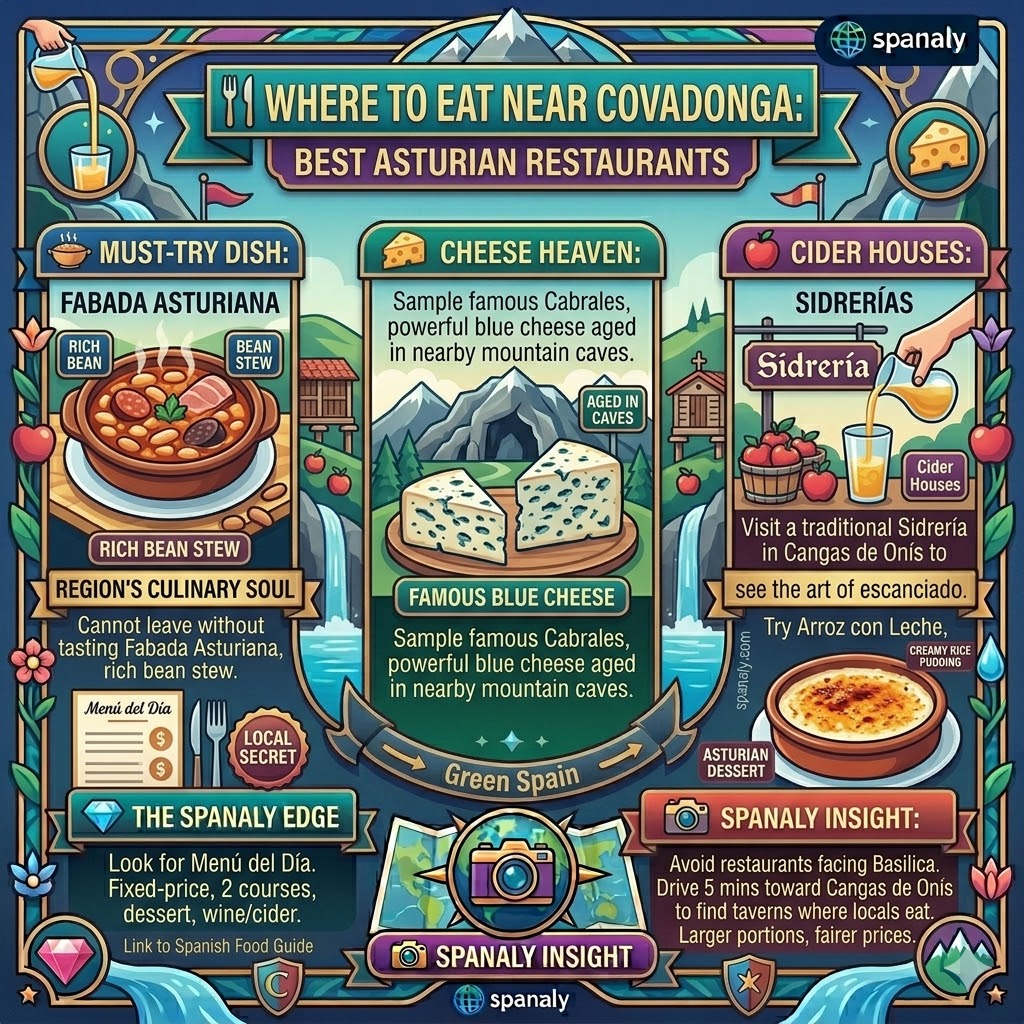
Dining near Covadonga is an invitation to taste “Green Spain” at its most authentic. The local cuisine is hearty, designed for mountain life, and centers around high-quality local produce.
🍲 Must-Try Dish: You cannot leave without tasting Fabada Asturiana, a rich bean stew that is the region’s culinary soul.
🧀 Cheese Heaven: Sample the famous Cabrales, a powerful blue cheese aged in nearby mountain caves.
🍎 Cider Houses (Sidrerías): Visit a traditional Sidrería in Cangas de Onís to see the art of escanciado (pouring cider from a height).
🍮 Sweet Finish: Try Arroz con Leche, a creamy rice pudding with a burnt sugar crust that defines Asturian desserts.
🥩 The Local Secret
For the best value, look for restaurants offering a Menú del Día. These fixed-price meals usually include two courses, dessert, and wine or cider for a very reasonable price. To master the art of dining like a local, check our Northern Spain Food Guide for expert tips on ordering and etiquette.
🏨 Where to Stay in Covadonga: Best Hotels & Rural Houses
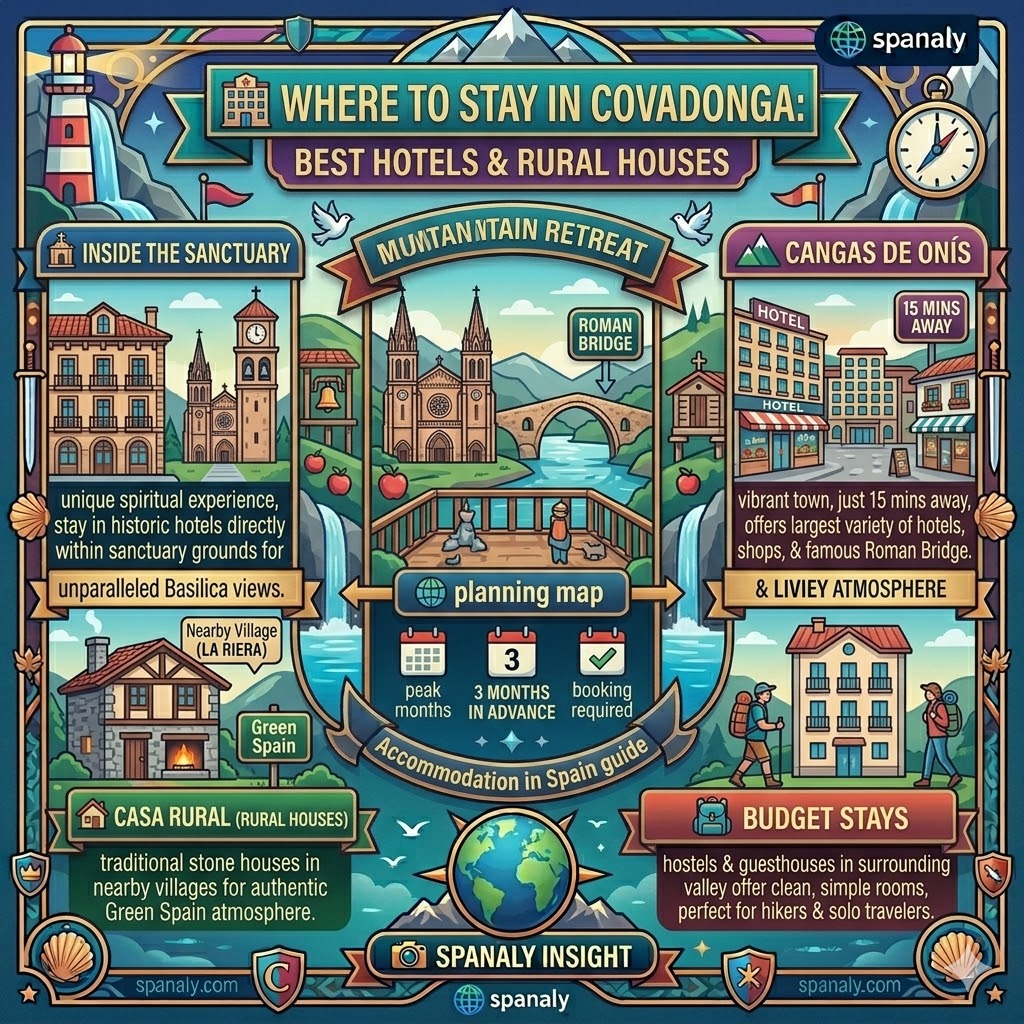
Choosing the right base depends on whether you want to wake up to the sound of church bells or stay in a lively town with more dining variety. Accommodation here ranges from historic hotels to cozy mountain retreats.
🕍 Inside the Sanctuary: For a unique spiritual experience, stay at the historic hotels directly within the sanctuary grounds for unparalleled views of the Basilica.
🏞️ Cangas de Onís: Located just 15 minutes away, this vibrant town offers the largest variety of hotels, shops, and the famous Roman Bridge.
🏡 Casa Rural (Rural Houses): Look for traditional stone houses in nearby villages like La Riera for an authentic “Green Spain” atmosphere.
🎒 Budget Stays: Several hostels and guesthouses in the surrounding valley offer clean, simple rooms perfect for hikers and solo travelers.
🛏️ Planning Your Base
If you are traveling during peak months, booking at least 3 months in advance is essential. To understand more about the different types of lodging available across the country, check our Accommodation in Spain guide for expert tips on finding the best value.
Spanaly Insight: If you plan to visit the Lakes of Covadonga early in the morning to beat the crowds, staying in the sanctuary or the immediate valley is a massive advantage, as you will be the first in line for the shuttle buses.
🗓️ Best Time to Visit Covadonga: Weather & Festivals
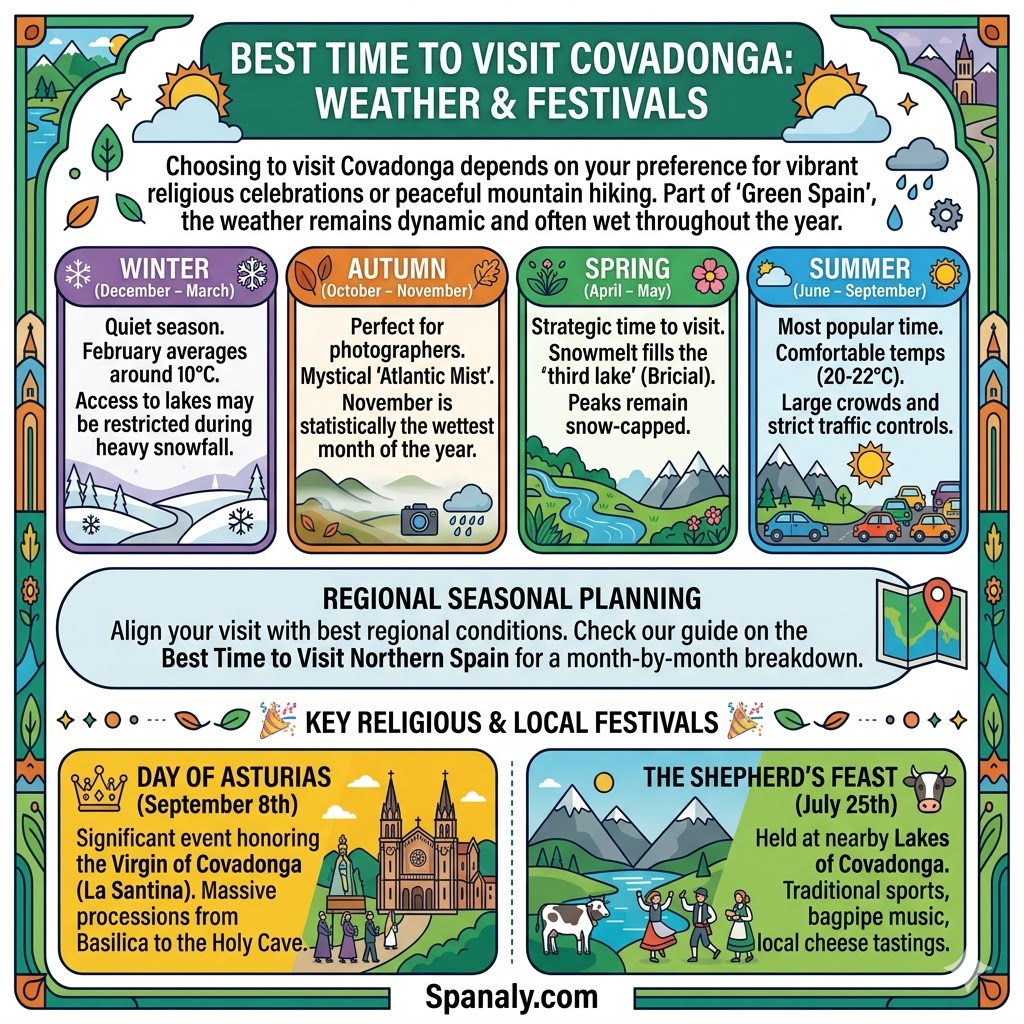
Choosing when to visit Covadonga depends on whether you prefer vibrant religious celebrations or peaceful mountain hiking. As part of “Green Spain,” the weather remains dynamic and often wet throughout the year.
☀️ Summer (June – September): This is the most popular time, offering comfortable temperatures between 20°C and 22°C. However, expect large crowds and strict traffic controls on the roads.
🌸 Spring (April – May): A strategic time to visit as the snowmelt fills the elusive “third lake” (Bricial) and the surrounding peaks remain snow-capped.
🍂 Autumn (October – November): Ideal for photographers seeking the mystical “Atlantic Mist”. Be prepared for November, which is statistically the wettest month of the year.
❄️ Winter (December – March): The quietest season, with February temperatures averaging around 10°C. Access to the lakes may be restricted during heavy snowfall.
📅 Regional Seasonal Planning
To align your visit with the best conditions across the entire region, check our guide on the Best Time to Visit Northern Spain for a month-by-month breakdown of weather and events.
🎊 Key Religious & Local Festivals
⭐ Day of Asturias (September 8th): The most significant event honoring the Virgin of Covadonga (La Santina). Expect massive processions from the Basilica to the Holy Cave.
🐄 The Shepherd’s Feast (July 25th): Held at the nearby Lakes of Covadonga, this celebration features traditional sports, bagpipe music, and local cheese tastings.
🥾 One Day Covadonga & Lakes Itinerary: Your Step-by-Step Plan
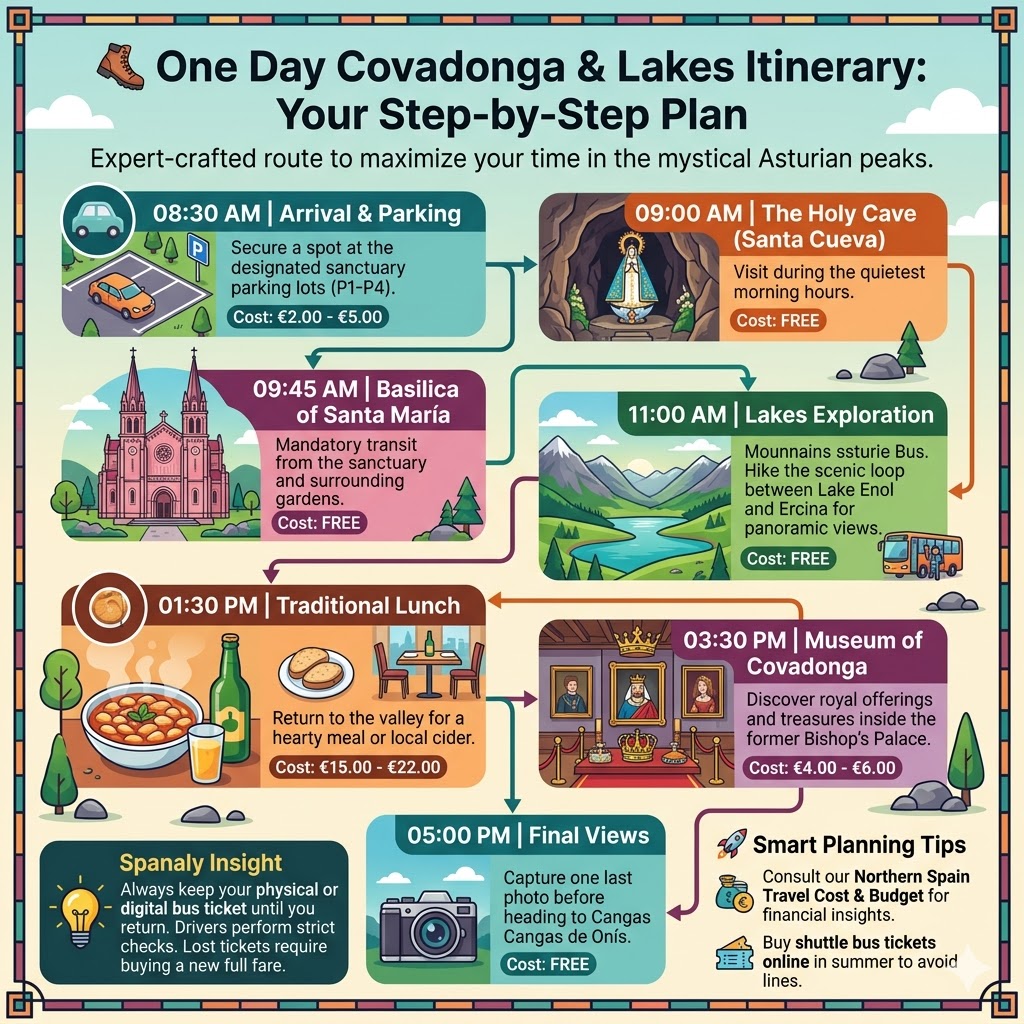
This expert-crafted route ensures you maximize your time while experiencing the mystical atmosphere of the Asturian peaks.
🚗 08:30 AM | Arrival & Parking: Secure a spot at the designated sanctuary parking lots (P1-P4). Cost: €2.00 – €5.00.
🙏 09:00 AM | The Holy Cave (Santa Cueva): Visit the Virgin of Covadonga during the quietest morning hours. Cost: FREE.
⛪ 09:45 AM | Basilica of Santa María: Explore the stunning pink limestone interior and the surrounding gardens. Cost: FREE.
🚌 10:30 AM | Board the Shuttle Bus: Take the mandatory transit from the sanctuary up to the Lakes. Cost: €9.00.
⛰️ 11:00 AM | Lakes Exploration: Hike the scenic loop between Lake Enol and Ercina for panoramic views. Cost: FREE.
🍲 01:30 PM | Traditional Lunch: Return to the valley for a hearty Fabada Asturiana or local cider. Cost: €15.00 – €22.00.
🖼️ 03:30 PM | Museum of Covadonga: Discover the royal offerings and treasures inside the former Bishop’s Palace. Cost: €4.00 – €6.00.
📸 05:00 PM | Final Views: Capture one last photo of the sanctuary before heading to Cangas de Onís. Cost: FREE.
🚀 Smart Planning Tips
To stay within your planned budget across the region, consult our Northern Spain Travel Cost & Budget for professional financial insights. Buy your shuttle bus tickets online during summer to avoid wasting time in long ticket queues.
Spanaly Insight: Always keep your physical or digital bus ticket until you return to the sanctuary. Drivers perform strict checks on every boarding, and lost tickets require buying a new full fare.
💡 Spanaly Elite Tips: Local Insider Secrets
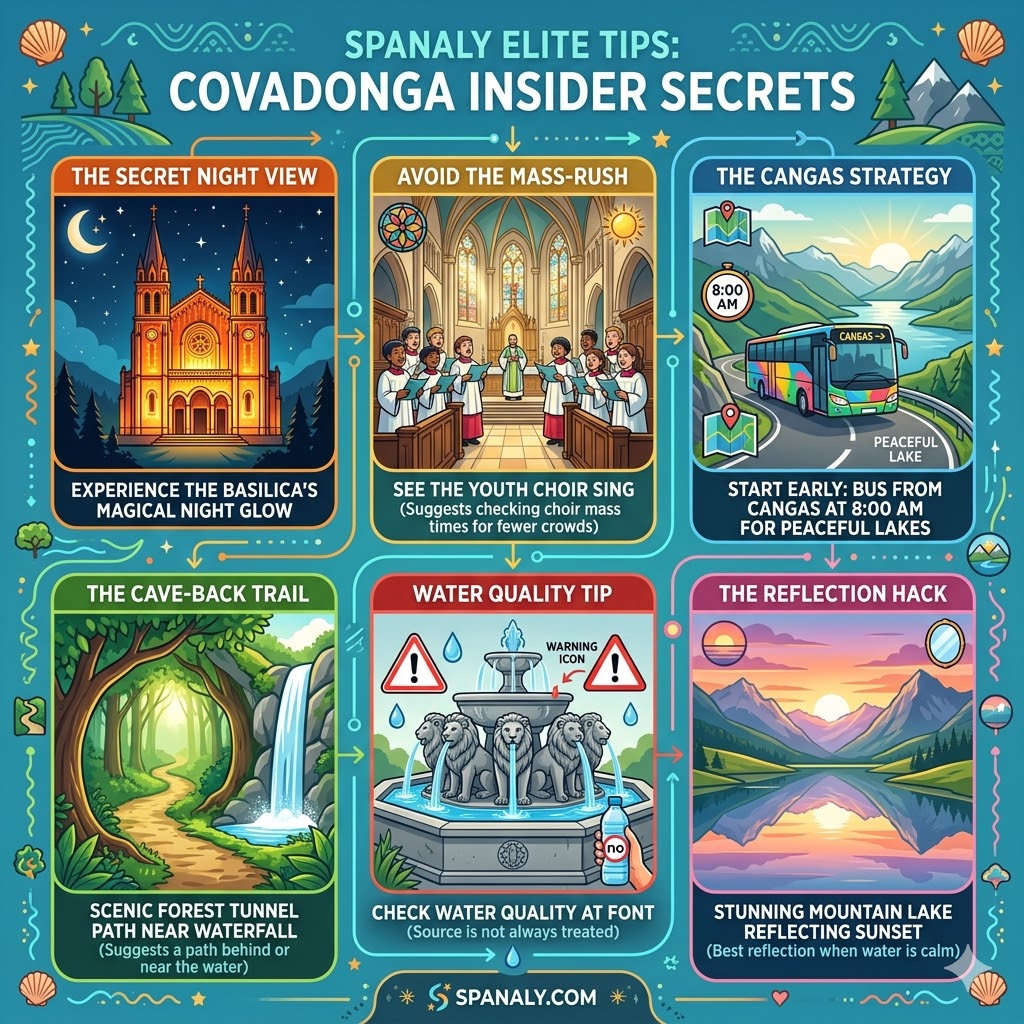
These expert insights go beyond the basic guidebooks, focusing on the small details that make a massive difference in your Covadonga experience.
🌑 The Secret Night View: Visit the sanctuary after 9:00 PM when the day-trippers leave; the Basilica is illuminated with a hauntingly beautiful orange glow.
🧘 Avoid the “Mass-Rush”: Check the official mass schedule and arrive 20 minutes before the end; you can catch the “Escolanía” (youth choir) singing for free.
🚗 The “Cangas” Strategy: Park in Cangas de Onís and take the first bus at 8:00 AM to the Lakes; you will have the reflecting water all to yourself.
👟 The “Cave-Back” Trail: Instead of taking the stairs back down from the Holy Cave, use the forest tunnel path; it offers a unique perspective of the waterfall.
🥤 Water Quality Tip: While the “Seven Spouts” water is legendary, it is extremely high in minerals; drink only a small amount to avoid stomach sensitivity during hikes.
📸 The Reflection Hack: For the perfect Lake Enol mirror photo, go to the “Mirador de la Reina” during the golden hour (sunset).
🛡️ Visitor FAQs – Covadonga Sanctuary & Lakes Guide
🛡️ Is the road to the Lakes of Covadonga safe for nervous drivers?
The road is safe but extremely narrow and winding. During the low season when private cars are allowed, we only recommend driving if you are comfortable with steep hairpins and reversing for oncoming buses. For a stress-free experience, using the official shuttle bus is the best logistical choice.
🎫 Do I need to book tickets for the Holy Cave or Basilica?
No, entry to the Santa Cueva and the Basilica is free. You do not need a QR code or reservation for these sacred sites. However, the Sanctuary Museum and the Shuttle Bus to the Lakes require paid tickets, which you should purchase online to avoid long queues during peak hours.
🐾 Can I visit Covadonga and the Lakes with my dog?
Yes, but with restrictions. Dogs are allowed in the outdoor sanctuary areas and on the mountain trails at the lakes. However, pets are strictly forbidden inside the Holy Cave, the Basilica, and the Museum. If using the shuttle bus, your dog must travel in a carrier in the luggage compartment.
👗 Is there a specific dress code for the Sanctuary?
As a major religious site, respectful clothing is required inside the Basilica and the Holy Cave. Ensure your shoulders are covered and avoid swimwear. Additionally, because the weather in Picos de Europa is dynamic, we recommend wearing layers and sturdy walking shoes even if it feels warm in the valley.
🏧 Are there ATMs and credit card facilities available?
Most shops, the museum, and restaurants accept credit cards. However, mobile signal can be spotty in the mountains, sometimes affecting card terminals. We recommend carrying some cash for small purchases, candles in the cave, or in case of technical issues with the bus ticket machines.
Covadonga Logistics Guide by Spanaly.com
Covadonga isn’t just a destination on a map; it is the raw, beating soul of Asturias. Standing between the damp limestone of the cave and the wind-swept lakes, you don’t just see history you feel it in the heavy mountain air.
🛡️ Touch the Past: Run your hand over the cold, pink stone where Pelayo’s rebels once stood their ground.
🏔️ Hear the Peaks: Listen to the distant clanking of cowbells and the whistle of the Atlantic wind across the craggy ridges.
🙏 Feel the Silence: Find that rare, bone-chilling stillness in the valley that stays with you long after you leave.
🌊 From High Peaks to Salty Shores Once the mountain mist clears and you’ve had your fill of sanctuary heights, the ocean calls. Follow the winding roads down to the coast to explore the bright, cliff-side houses in our Cudillero Travel Guide for the ultimate Asturian contrast.
Safe travels, and may “La Santina” watch over your footsteps through the wild greens of Spain!